
New Construction Homes in Orlando: Buyer's Guide for 2026
Shirley Mancero August 6, 2026
Shirley Mancero August 6, 2026
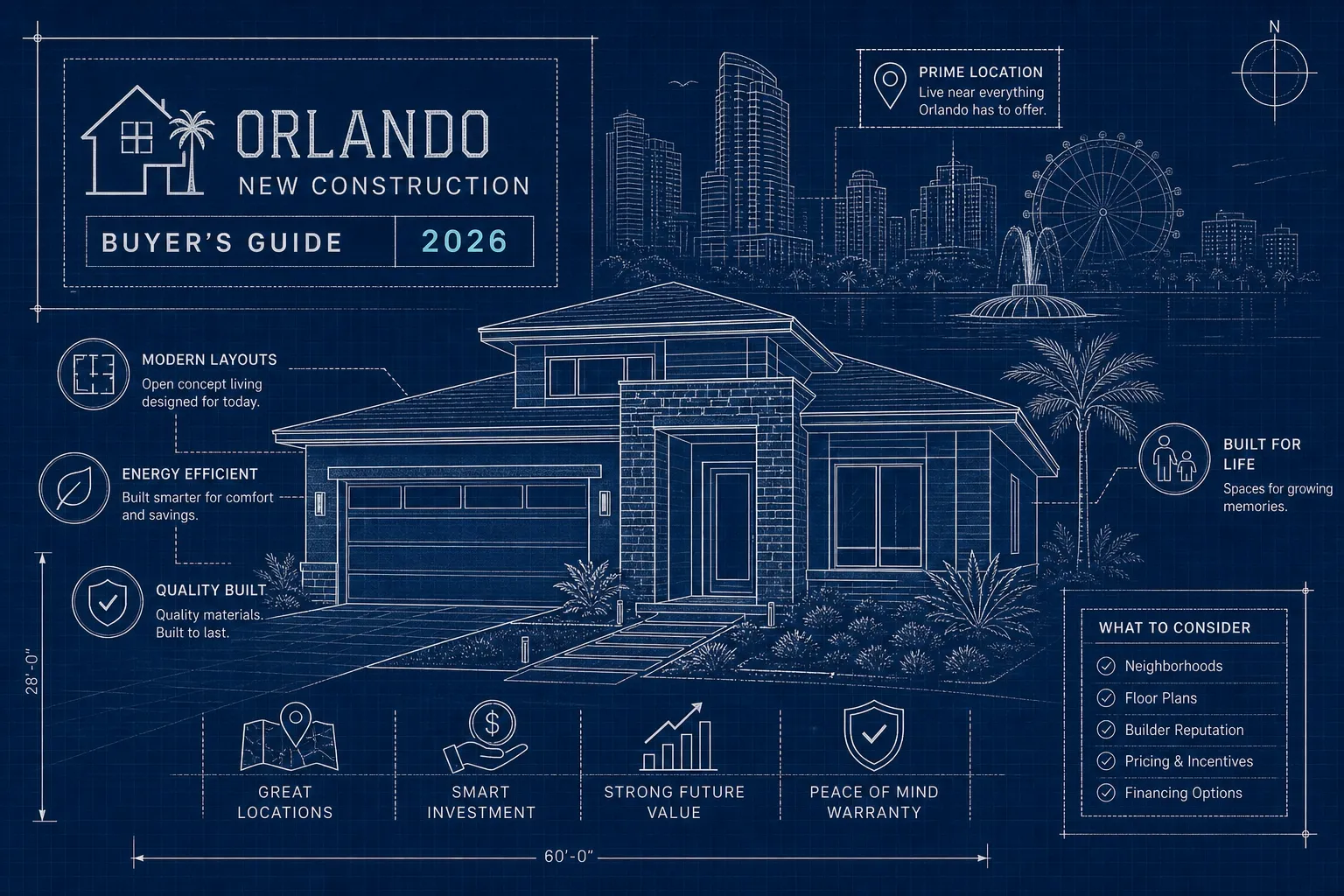
New construction homes in Orlando look straightforward on the surface: walk into a model home, pick your finishes, and hand over a check. The reality is considerably more layered. Builder contracts are written by the builder's attorneys, design centers are structured to encourage upgrades beyond your original budget, and the sales rep greeting you at the door works for the builder, not for you. Buyers who go in unprepared can overspend significantly, sometimes without ever knowing it.
This guide covers what you actually need to know before touring your first model home: the strongest growth corridors in the Orlando metro, what prices and square footage to expect, how to spend your design center budget strategically, and why representation from a knowledgeable buyer's agent changes the entire outcome. Shirley Ann, The Fintech Agent, has guided buyers through builder contracts and design center negotiations across Lake Nona, Horizon West, and Sunbridge, and this guide is written entirely from the buyer's side of the table.
Four growth corridors are generating the most new construction activity in the Orlando metro in 2026. Lake Nona, anchored by Laureate Park and The Cove at Nona Sound, draws buyers with A-rated OCPS schools, a tech and medical hub identity, and proximity to Orlando International Airport. Horizon West and Hamlin, including Waterleigh and Encore at Ovation, are known for resort-style amenities, lakes, multiple pools, fitness centers, and schools located inside the neighborhood boundaries, which is a genuine differentiator for families.
Sunbridge in St. Cloud is one of the more ambitious master-planned projects in the region, featuring a 27,000-square-foot clubhouse, an outdoor amphitheater, pickleball and tennis courts, and a tavern and grill inside the community. Del Webb Sunbridge and Weslyn Park are the two anchor neighborhoods currently open and selling. Apopka, with communities like The Oaks at Kelly Park and Winding Meadows, appeals to buyers who want newer homes, access to major road corridors, and newer school zones at a slightly lower price point. EverBe is Orlando's newest master-planned entry and worth watching as it develops through 2026.
New construction pricing in Orlando breaks into three tiers. Entry-level homes from builders like D.R. Horton, LGI Homes, and KB Home run roughly $270,000 to $350,000 and typically land between 1,200 and 1,900 square feet. The mid-market tier, served by Lennar, Mattamy, Pulte, and Taylor Morrison, covers $350,000 to $550,000 with homes ranging from 1,700 to 2,800 square feet. Upper-end new builds from Toll Brothers and David Weekley Homes start around $550,000 and can stretch well past $1 million in select communities, with square footage from 2,500 to over 4,500.
Many listings in the Orlando metro cluster in the mid-market tier, where incentive packages are also the most competitive. Matching your budget to a corridor first, then narrowing to a specific builder, is a more efficient approach than touring model homes randomly.
Ready to find new construction homes in Orlando that match your budget? Browse current listings through Shirley Ann's home search portal.
The model home exists to sell you on the builder's best version of the product. Every finish, fixture, and furniture placement is calculated. The on-site sales representative is a trained professional whose job is to move homes at the builder's price and on the builder's timeline. They are not required to disclose when a competing community two miles away is offering a better deal on a nearly identical floor plan.
The base price you see on the sign is a starting point, not the final number. Lot premiums for water views, corner positions, or cul-de-sac locations can add tens of thousands of dollars before you've chosen a single upgrade, ranges vary widely by community and builder, so always ask for the full lot premium schedule upfront. Earnest money deposits typically run 1 to 3 percent and are often non-refundable after a short review window, though terms vary by builder and contract. Builder contracts are drafted to protect the builder's interests, and the termination, inspection, and delay clauses reflect that reality. Reading every page before you sign is not optional.
Orlando builders are actively competing for buyers in 2026 with meaningful incentive packages. Rate buydowns through affiliated lenders are landing in the 5.25% to 5.75% range on 30-year fixed loans as of mid-2026, compared to the higher open-market rate. Closing-cost credits range from $15,000 to $30,000 depending on the builder and community, and design center upgrade allowances give buyers flexibility on finishes.
The catch is that most of these incentives are conditional on using the builder's preferred lender. That lender may quote a rate 0.25% to 0.50% higher than an independent lender, which adds up significantly over a 30-year loan. The right comparison is total cost over your hold period, not the headline rate. Get a Loan Estimate from the builder's lender and a matching estimate from at least one independent lender, then compare APR, fees, and the dollar value of any incentive you'd lose by going outside. A buyer's agent who understands financing can model this comparison for you before you commit.
Some upgrades must be selected before construction starts and cannot be added later at any reasonable cost. Structural options fall into this category: bonus rooms, extended lanais, three-car garages, and room additions are only available before the slab is poured. These deserve your highest priority in the design center budget. Electrical rough-ins, additional recessed lighting circuits, and pre-plumb for a water softener are also significantly cheaper to include during construction than to retrofit after closing.
Flooring throughout main living areas is one of the highest-value design center choices you can make. Engineered hardwood in the main living spaces consistently performs well at resale in Central Florida, and replacing builder-grade flooring after closing is both expensive and disruptive. Cabinet box quality, not just door fronts, is another category worth prioritizing for kitchen upgrade ROI. Impact-rated windows and doors are a separate but equally important investment: they reduce insurance costs and storm risk, which matters considerably in Florida.
Knowing which upgrades to prioritize is easier when you have someone in that room who isn't selling you the upgrade.
Builder-brand appliances, blinds, decorative hardware, and landscaping packages are reliably marked up at the design center. As an example, items like appliances and lighting packages that run $15,000 through the design center can often be sourced post-closing for considerably less from retail suppliers and independent installers, though actual savings vary by product and installation cost. These items are interchangeable after you own the home, which is exactly why they don't belong at the top of your upgrade priority list.
Use your builder credit strategically. Permanent structural upgrades, mechanical pre-wires, and durable flooring in high-traffic areas deliver lasting value. Appliances, fixtures, and decorative elements can wait. Going into the design center appointment with a prioritized list, rather than reacting to what the design consultant shows you first, is the difference between a smart upgrade budget and an overspent one.
The builder's on-site sales representative cannot negotiate against their own employer, flag contract clauses that limit your recourse, or tell you when a competing community nearby has a better deal. They are knowledgeable about their product and genuinely helpful within that scope, but their obligation runs to the builder. Most buyers don't fully understand this distinction until they're already under contract and reading fine print they wish someone had flagged earlier.
Builder contracts routinely include clauses that extend completion timelines indefinitely, limit inspection rights, cap your remedy for construction defects, and restrict your ability to terminate and recover your deposit. These aren't hidden, but they are written in dense legal language that rewards careful review. Walking in without representation means you're reviewing that language alone, against a team that writes it for a living.
In most new construction transactions, buyer's agents are compensated by the builder at closing, making professional representation available at no direct out-of-pocket cost to the buyer. That said, compensation arrangements can vary, always confirm the terms in a written buyer-broker agreement before your first model home visit. After the 2024 NAR settlement changes, this compensation is negotiated outside the MLS and documented in that agreement, but the structure remains common: builders typically treat buyer-agent commissions as part of their sales and marketing budget.
This is where Shirley Ann, The Fintech Agent, brings a specific advantage. Her background in data modeling and fintech means she can run a genuine side-by-side comparison of the builder's preferred lender versus an open-market loan, factoring in the full incentive package, the rate differential, and your projected hold period. She reviews builder contracts before you sign, negotiates upgrade credits and lot selection, tracks construction timelines, and coordinates independent phase inspections. That analytical depth, combined with hands-on experience across Lake Nona, Horizon West, and Sunbridge, is what separates a transactional agent from a genuine advocate.
New construction homes are not automatically free of defects, and the builder's certificate of occupancy is issued by the municipality based on code compliance, not on the thoroughness of a buyer-focused inspection. Three independent inspections protect you throughout the build: a pre-slab check covering foundation and plumbing rough-in, a pre-drywall inspection while framing, electrical, HVAC, and plumbing are still visible, and a final walkthrough inspection before closing.
The pre-drywall phase is the most critical and typically costs $200 to $400 through a licensed independent inspector. Once the walls close up, issues in framing, wiring, duct routing, and moisture sealing become expensive and difficult to surface. Catching a problem before drywall means the builder fixes it cleanly during construction. Catching it two years post-closing means negotiating a repair on a finished wall.
Common defects flagged at new construction final walkthroughs include improper lot grading and drainage, gaps in attic insulation, HVAC airflow imbalances between rooms, incomplete caulking around windows and doors, and cosmetic punch-list items the builder's team missed.
Bring a written punch list to your walkthrough and confirm every item is signed off before you accept the keys. Your inspector's job is to document these issues before you close, while the builder still has contractual incentive to address them.
The most practical platforms for live inventory of new build homes in Orlando are NewHomeSource, Jome, and the individual builder websites maintained by Lennar, Pulte, D.R. Horton, Mattamy, and Ryan Homes. Quick-move-in inventory, homes that are already built or near completion, is where builders tend to concentrate their strongest incentive packages, since carrying costs increase with each month a finished home sits unsold. Check builder sites and listing platforms directly for current availability, as inventory changes frequently.
Distinguish between quick-move-in homes, which are often available within 30 to 60 days, and to-be-built homes, which offer full customization but typically require 6 to 12 months before closing. If your timeline is flexible, to-be-built gives you design center input from the start. If you need to move within the year, quick-move-in inventory with a strong incentive package is usually the better path.
Contact a buyer's agent before you walk into any model home. Most builders have a registration policy: once you visit a community unrepresented, they will not allow an agent to be added to your transaction later. That policy exists because the builder's sales team has already begun working the relationship. Registering with your agent present protects your right to representation from the first conversation forward.
Reach out to Shirley Ann, The Fintech Agent, before you schedule your first tour. The initial consultation is no-pressure and designed to help you clarify your budget, target communities, and financing options before you're sitting across from a builder's sales rep. Her home search portal also tracks current Orlando new homes for sale, including move-in ready inventory, so you arrive at every tour already knowing what the market looks like.
You are not required to have one, but it is strongly in your interest. The builder's sales representative works for the builder, not for you. A buyer's agent reviews contracts, negotiates credits, and coordinates inspections, typically at no direct cost to you, since builders commonly cover this as part of their sales budget. Confirm the compensation arrangement in a written buyer-broker agreement before your first visit.
Quick-move-in homes that are already built or near completion can close in 30 to 60 days. To-be-built homes, where you select finishes from the ground up, typically require 6 to 12 months depending on the builder and community.
Some are. Builders rarely budge on base price, especially in active communities, but upgrade credits, lot selection, and rate buydown terms are areas where an experienced buyer's agent can add value. The incentive package is often where the most leverage exists.
A phase inspection is an independent review conducted at a specific point during construction, typically pre-slab, pre-drywall, and at final walkthrough. The builder's certificate of occupancy confirms code compliance, not buyer-focused quality. Independent phase inspections catch defects while they are still accessible and while the builder has contractual incentive to fix them.
Buying a newly built home in the Orlando metro in 2026 is a genuine opportunity, and the builder incentive packages available right now make it a competitive moment for prepared buyers. The decisions that matter most are choosing the right neighborhood and price tier, understanding the full cost of the builder's preferred lender versus independent financing, and spending your design center budget on permanent upgrades rather than decorative ones.
If you're shopping new construction homes in Orlando, the single most effective move you can make before any model home visit is securing experienced representation. Buyers who walk in with a knowledgeable local advocate and a clear budget framework consistently reach closing with better terms and fewer surprises. Shirley Ann, The Fintech Agent, brings the analytical depth and hands-on new construction experience to make that outcome the norm rather than the exception. Schedule a consultation or explore current Orlando new homes for sale through her portal before you tour your first model home.
Stay up to date on the latest real estate trends.

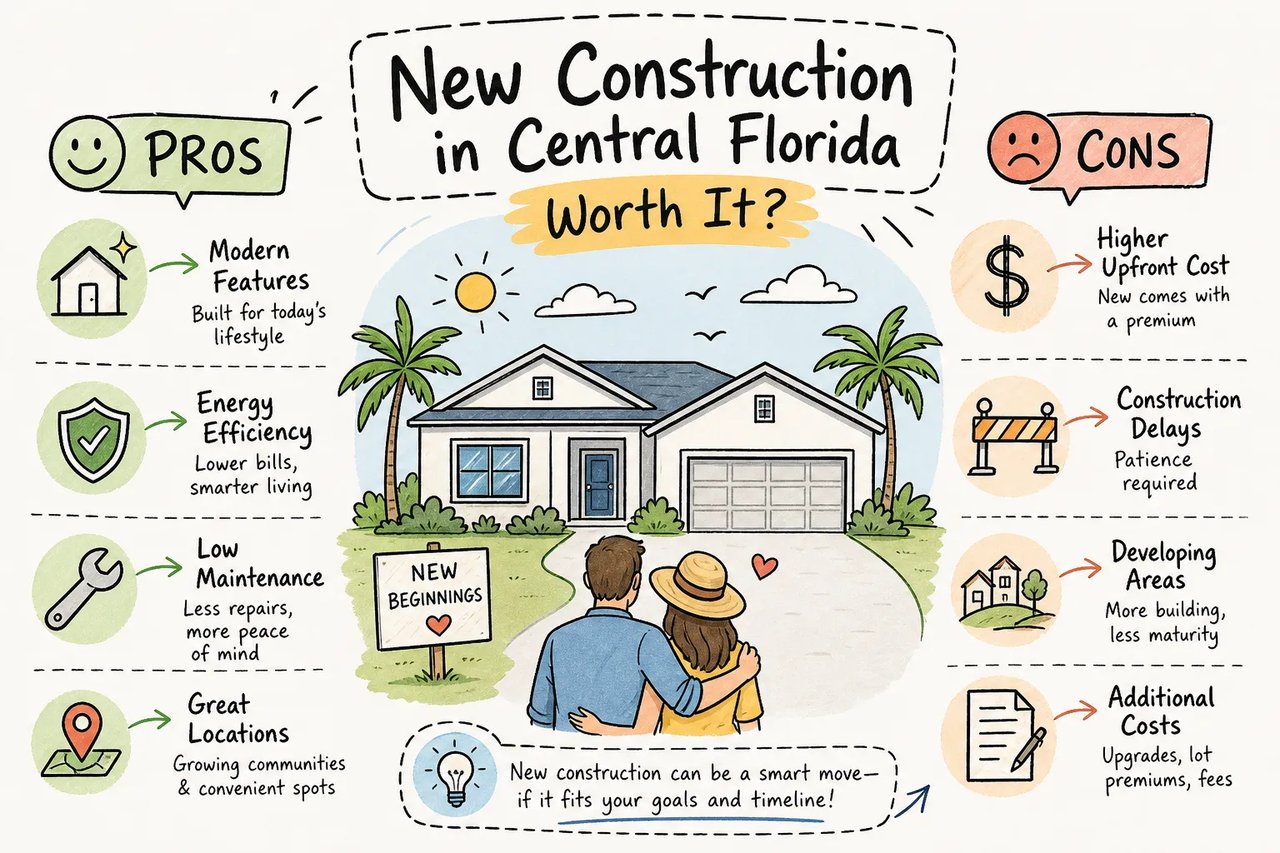
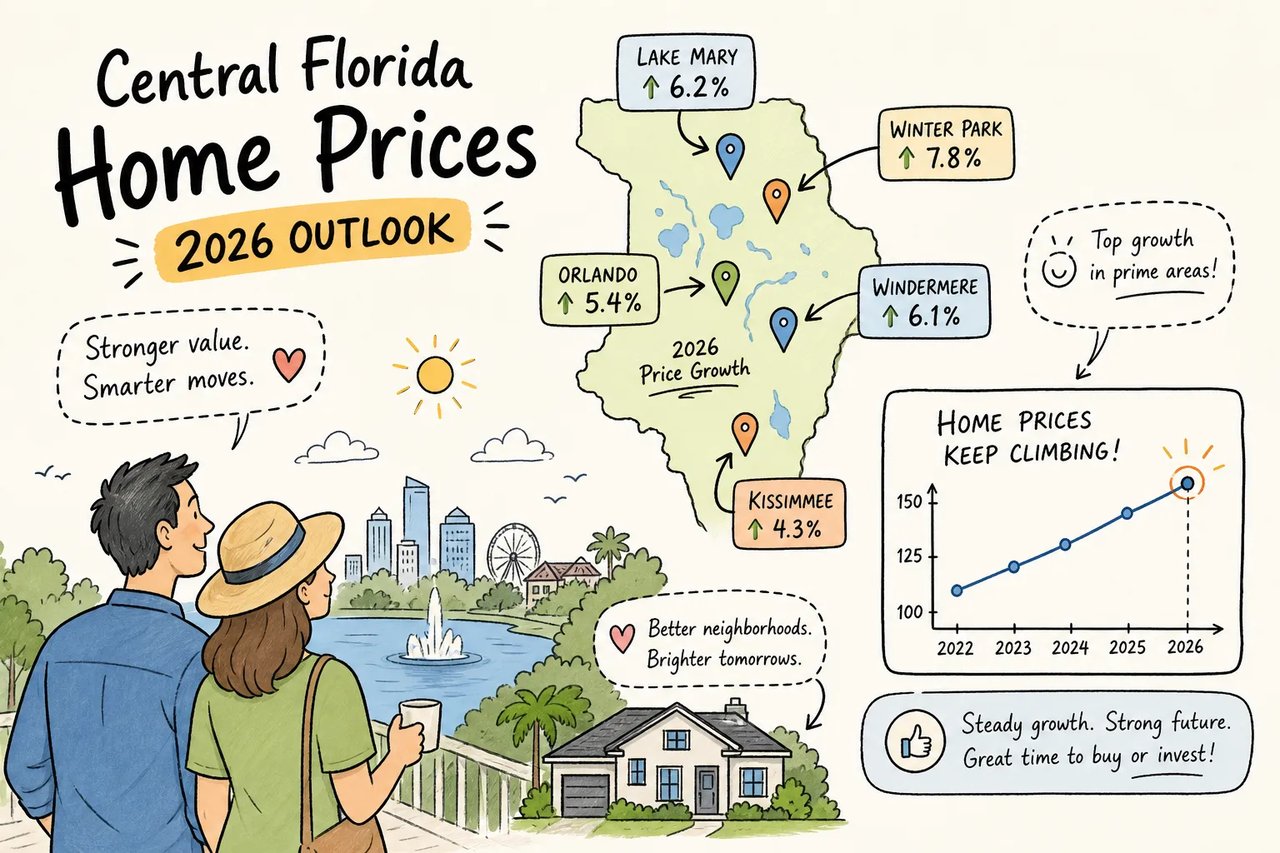

Work with Shirley Ann The Fintech Realtor®, for trusted residential real estate guidance in Orlando, FL. She combines integrity, local market expertise, multilingual communication, and data-driven strategies to help buyers, sellers, and investors achieve their real estate goals with confidence.